Category: Education

  • What remains when I am not in the room

    What remains when I am not in the room

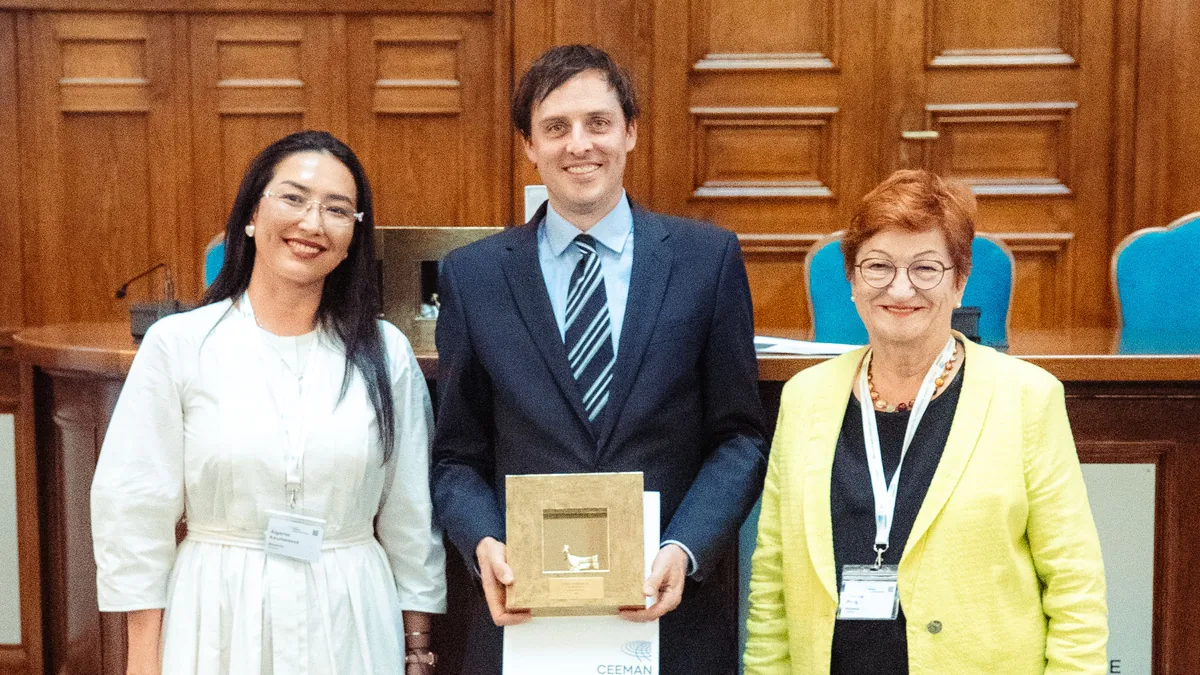
    At the 34th CEEMAN Annual Conference in Bucharest I received the CEEMAN Champion Award in the category Teacher of the Year 2026. CEEMAN is an international association for management development with around 200 member institutions from more than 50 countries; its Champion Awards recognise achievement in teaching, research, responsible management education and institutional leadership.

    What the jury highlights

    One point stands at the centre of the citation, and it is the one that matters most to me as well: my students do not analyse prepared case studies but work on a decision that actually concerns them. They clarify their objectives, develop alternatives from them, assess consequences and weigh trade-offs deliberately. This is supported by Entscheidungsnavi, which I developed together with Rüdiger von Nitzsch.

    Why the anchoring matters more to me than the course

    A course that depends on one person ends with that person. A method that only works when its originator explains it is not a method but a person. And for students who do not take the course, it has no consequences — and they are always the majority.

    That is why I am particularly glad this award does not refer to a single course. At MCI, decision-making competence is now treated across programmes as a competence in its own right and reviewed in the Assurance of Learning process. It is no longer my subject but the institution’s. Students encounter it regardless of whether they chose to.

    Where this should lead

    That is an intermediate step, not the goal. I regard decision-making competence as a future skill in the same sense as data literacy or academic writing: an ability every degree should convey, whatever the discipline.

    The argument is straightforward. Everyone makes decisions during a degree and afterwards that shape what follows — about specialisations, first jobs, moving cities, later about responsibility for others. So far we assume people can do this. Training studies show they can learn it. Between the two lies a gap that universities could close.

    What is missing is not a method — that exists. What is missing is the matter-of-factness with which we anchor other cross-cutting competences in the curriculum. That such anchoring works at one institution shows that it can be done.

    And beyond the university

    The same concepts underlie KLUGentscheiden!, an initiative to build decision-making competence among young people; more than 500 school teachers have been trained in it so far. They are also due to be used in public careers guidance, reaching several thousand advisors.

    My thanks go to CEEMAN and the jury, to my colleagues at MCI who supported the curricular anchoring — and to the students, who bring their own decisions and thereby show whether the method is worth anything.

    About the prize

    CEEMAN Champion Award – Teacher of the Year 2026, presented by CEEMAN – International Association for Management Development in Dynamic Societies, at the 34th CEEMAN Annual Conference, 24th of September 2026 in Bucharest. → https://www.ceeman.org/competitions-awards/ceeman-champion-awards/champions-2026
  • Academic success begins before the first lecture

    Academic success begins before the first lecture

    Why students rarely leave because of the degree programme alone – and what universities should conclude from that.

    When students switch subjects or leave university, we usually look for the causes inside the degree programme: exam pressure, poor supervision, a bad fit. That falls short. Many of these trajectories have a prehistory that begins long before the first lecture. Young people make a far-reaching educational decision without ever having learned how to approach one systematically. In the current issue of Forschung & Lehre (9/2026) I argue that decision-making competence should not be treated as a remedial offer for the uncertain, but as a core academic competence.

    The real question comes before the comparison

    “I am torn between business administration and economics – but sports economics sounds interesting too.” The obvious next step is to compare degree programmes. The better question is: which decision is actually at stake here? “Which subject should I study?” triggers a different search process from “Which educational path fits my objectives, my abilities and the life I want?” The second question broadens the view: what is compared is no longer subjects, but paths into a desired future.

    Objectives first, alternatives second

    Once objectives are clear, the search for alternatives changes as well. It is no longer only about the subject a friend chose or the university nearby. Objectives help generate further alternatives and identify the information needed for a realistic assessment of consequences. What usually remains are trade-offs: academically attractive but far from home; good career prospects but few links to substantive interests. Such conflicts should not be suppressed but named explicitly.

    More information alone helps only so far. Anyone unable to structure their own decision situation does not automatically gain orientation from additional facts.

    Decision-making competence can be trained

    That is the good news. In important decisions, people typically identify only a fraction of their relevant objectives and alternatives – but these abilities can be strengthened deliberately. In a study published in the European Journal of Operational Research we showed that structured training produces a lasting improvement in proactive cognitive decision-making skills.

    A task for the whole system, not a single office

    If decision-making competence is a precondition for successful educational trajectories, it cannot rest on one office alone. It has to be fostered before university, taken up in advising and developed further during the degree. Through deadlines, elective structures, module architectures and programme descriptions, universities shape a decision architecture in any case – deliberately or not. Concrete starting points include modules in the first-year phase, reflection assignments in general studies, digital support for choosing specialisations, and structured formats in student advising and career services. These do not replace existing provision; they make it more effective.

    Leaving is not the same as failing

    A good university should not prevent every decision to leave. It should enable students to recognise in time whether they are on the right path. A well-founded choice may equally lead to a change of subject, a vocational training programme or direct entry into work. What matters is that the step is a considered one rather than a reaction to pressure. The problem is not the switch itself, but a switch that results from avoidable disorientation, unclear objectives or ignorance of relevant alternatives.

    Academic success does not begin with the first exam. It begins with the ability to choose one’s own educational path deliberately.

    About the article Siebert, J. U. (2026). Den Blick öffnen. Mit Entscheidungskompetenz durch Studium und Berufseinstieg. Forschung & Lehre, 9/26, 52–53. (in German) ↗ ; authorized English translation →
    References Siebert, J. U., Keeney, R. L. (2015). Creating More and Better Alternatives for Decisions Using Objectives. Operations Research, 63(5), 1144–1158. Siebert, J. U., Kunz, R., Rolf, P. (2021). Effects of decision training on individuals’ decision-making proactivity. European Journal of Operational Research, 294(1), 264–282.

  • Decision-making competence can be taught – and tested

    Decision-making competence can be taught – and tested

    On 8 September I received the Ars Docendi Anerkennungspreis – the recognition award of the Austrian Federal Ministry of Women, Science and Research – in Vienna, in the category “socially and sustainability-oriented teaching”, for the course design “From subject knowledge to judgement: developing decision-making competence systematically”. I am glad about the recognition. What matters more to me is the question behind it: why do we assume so readily in higher education that students can decide – and teach it so rarely?

    What happens in the course

    Over one semester, students work on real decision problems from business, politics and society: from logistics strategies to sustainability- and technology-related challenges. They clarify their objectives, develop courses of action, compare economic, social and environmental effects, and derive a reasoned recommendation.

    The difference from a classical case study lies at the very beginning. In a case study the problem is given and the analysis is open; here it is the other way round. Students first have to work out which decision is actually at stake and which objectives are attached to it. Only then does the methodological toolkit pay off.

    Not a didactic aspiration but a testable claim

    Students should not learn to reproduce supposedly correct answers, but to make defensible decisions under uncertainty. Decision-making competence can be learned, examined and measured. This is not a programme statement: it shows up in the course evaluations.

    Embedded in the curriculum, not offered as an elective

    A course design only takes effect if it does not depend on the accident of course selection. At MCI, “Responsible Decision Making” is one of the learning goals of the bachelor programmes and is reviewed within the Assurance of Learning process of the accreditation body AACSB. The award-winning design is embedded in six bachelor programmes, so it reaches more than those who are interested anyway.

    What students take away

    “What I learned in this course I still apply today. I approach complex decisions differently than before – more structured, and with more clarity about what actually matters to me.” Julian Pfurtscheller, Chair of the MCI student union and a former student

    What the award says – and what it does not

    The Ars Docendi Anerkennungspreis honours a single course design. That is a different object from the recognitions that have come in the same period. CEEMAN, the international association for management development, presented me with the Champion Award in the category “Teacher of the Year 2026” in Bucharest on 24 September; that award refers to teaching performance as a whole. The Society of Decision Professionals recognised my engagement in advancing and applying decision analysis with the Inspirational Achievement Award, and the International Academy of Information Technology and Quantitative Management recognised my research with the Richard Price Award.

    Four awards, four different objects. What connects them is the conviction that deciding is an ability, not a character trait.

    Learning to decide does not make you more certain. It makes your choices better founded.

    About the award

    Ars Docendi – Austrian State Prize for Excellence in Teaching. Recognition award (Anerkennungspreis) in the category “socially and sustainability-oriented teaching”, presented by the Federal Ministry of Women, Science and Research in Vienna on 8 September 2026. Official Award Profile ↗   ·   Press release ↗  

  • Teaching is described by its methods. It should be judged by its goals.

    Teaching is described by its methods. It should be judged by its goals.

    I was shortlisted for the European Award for Excellence in Teaching in the Social Sciences and Humanities. Central European University has presented it since 2011 to academics teaching in the European Higher Education Area; it carries the Diener Prize of 5,000 euros. The award went to another candidate in early September. The outcome occupies me less than something I noticed while assembling the application.

    A dossier forces you to write things down

    An application of this kind requires you to document your own teaching: course descriptions, assessment concepts, feedback from students and from colleagues, an account of your understanding of teaching. Anyone doing this inevitably reads other teaching concepts, calls for applications and accreditation documents as well. A regularity stands out: almost all of them describe first how teaching is done — blended learning, project-based work, digital tools — and only afterwards what it is meant to achieve. The second part often remains implicit.

    The difference between means and ends

    In decision analysis this distinction is central. A fundamental objective is what you pursue for its own sake. A means objective matters only because it contributes to a fundamental objective. Flipped classroom, peer feedback, AI-supported tools: all of them means. They are replaceable as soon as something better becomes available.

    The order is not merely a question of presentation. It determines which alternatives come into view at all.

    Start with methods and you vary what you already know. Start with objectives and you arrive at alternatives that do not appear in the catalogue of methods.

    That may mean different assessment formats, different assignments, and sometimes the conclusion that a piece of content has no place in the curriculum.

    The question that should come first

    What should graduates be able to do that they could not do without this degree? My answer: they should be able to structure a decision under uncertainty so that they can justify it to themselves and to others. Subject knowledge is a precondition for this, not the result. That answer implies something different from a catalogue of methods: assessments in which students document a decision of their own instead of reproducing models; projects on questions with no known solution; criteria that address the process rather than the result.

    I regard this order as the point at which teaching development is decided.

    What remains

    For me the value of such procedures lies not in their outcome but in the compulsion to be explicit. You have to write down what you otherwise take for granted, and in doing so you notice where the justification gets thin. That does not require a prize. It is enough to read one of your own course descriptions with a single question in mind: does it say what all this is good for — or only how it is done?

    About the award: European Award for Excellence in Teaching in the Social Sciences and Humanities, presented by Central European University — elkana.ceu.edu

    Further reading: MCI news item of 29 September 2025 on the shortlist nomination

  • Sound decisions are the key

    Sound decisions are the key

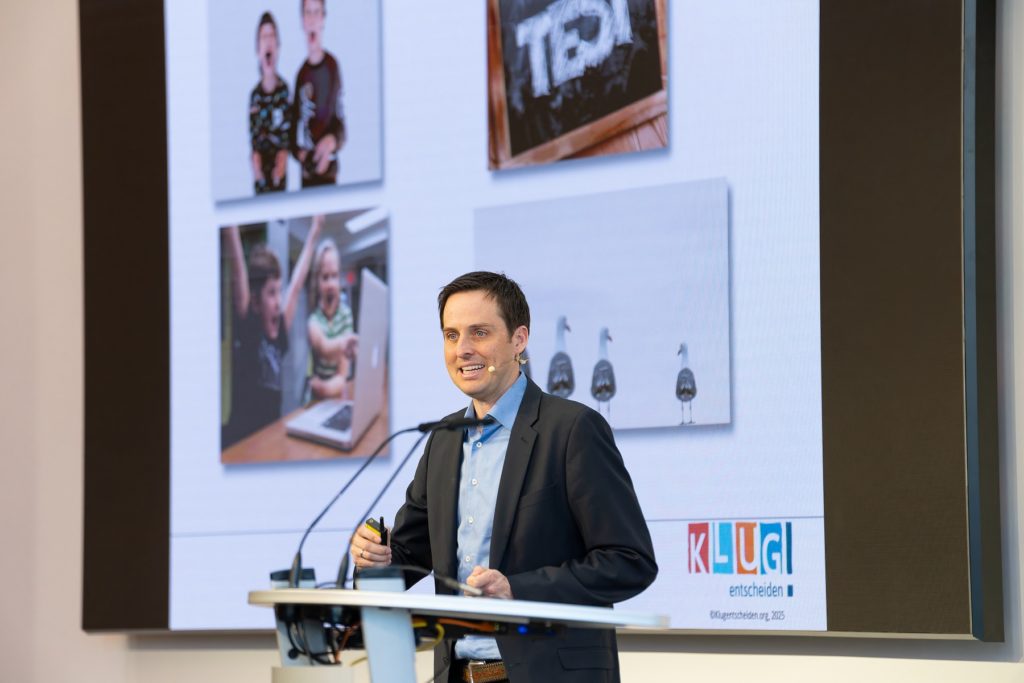
    At the second Education Summit of the Employers’ Associations of Lower Saxony I spoke about the question career orientation usually skips: young people learn a great deal about which paths exist – and almost nothing about how to choose between them.

    Talk: Sound decisions are the key – Career orientation through decision analysis
    Event: 2nd UVN Education Summit, “Career orientation as the key to success”
    Date and venue: 19 March 2025, Karriere-Campus Hannover
    Host: Unternehmerverbände Niedersachsen e.V. (UVN)
    Event page (UVN)  ·  Recording of the summit

    Around 250 guests from business, schools and politics came together at the Karriere-Campus in Hannover. The political line-up showed how much weight the topic carries in Lower Saxony: two state ministers took part – Minister of Education Julia Willie Hamburg and Minister of Economic Affairs Olaf Lies, now Minister-President of the state.

    Postponing is a decision too

    Roughly one in three young people drops out of vocational training or university study shortly after starting – with consequences for the skills shortage and a considerable burden on the individuals themselves. One reason is rarely named: many young people see decisions as problems to be solved. Solving problems is unpleasant, so they put it off. At some point the window closes and only the leftovers remain. Or they do “nothing for now” – and the first “nothing for now” is usually followed by a second.

    We need to inspire young people not only about careers, but about choosing one.

    Decision competence is the missing building block

    Internships, aptitude tools, careers fairs, open days: the existing offerings achieve a great deal, and they have one thing in common – they widen the range of choices. What they cannot do is make the choice. That requires the ability to decide independently and on a sound basis. Decision competence therefore does not compete with established career orientation; it is the building block that makes it effective.

    I illustrated this with KLUGentscheiden, which I initiated as a research project at the University of Bayreuth. Using methods from decision analysis, we break a student’s decision down into manageable steps together with them: clarify objectives, develop alternatives, bring the two together. Our digital tool KLUGnavi supports the analysis. The evaluation shows that afterwards students perceive the choice of career or study programme as less difficult and rate themselves as more proactive and more self-efficacious (Siebert, Becker & Oeser, 2023, Decision Sciences Journal of Innovative Education 21(1), 10–25).

    The bottleneck is anchoring it in schools

    Teachers’ interest is considerable – in Bavaria alone we have trained more than 400 of them as multipliers, and the materials are available free of charge. The real hurdle comes afterwards: it is precisely the most committed teachers who meet resistance when they try to establish the programme permanently at their school.

    Saarland shows how it can work. There, “KLUGentscheiden! goes Saar” – funded by the statutory health insurance funds and run together with the Landesamt für Pädagogik und Medien and the Ministry of Education and Culture – is working on exactly that until 2027: adapting the materials to different timetable formats, qualifying teachers through train-the-trainer sessions, and handing delivery over to the schools themselves. That kind of structural anchoring is what is needed – and it is what I spoke about in Hannover.

    More on materials and teacher training: klugentscheiden.org

  • Learning to decide wisely and becoming happy: Studies show the effect of training on decision-making behaviour

    Learning to decide wisely and becoming happy: Studies show the effect of training on decision-making behaviour

    Veröffentlichungen

    Johannes Ulrich Siebert, Reinhard E. Kunz, Philipp Rolf. Effects of decision training on individuals’ decision-making proactivity. European Journal of Operational Research (2021), DOI: https://doi.org/10.1016/j.ejor.2021.01.010

    Johannes Ulrich Siebert, Reinhard E. Kunz, Philipp Rolf: Effects of proactive decision making on life satisfaction. European Journal of Operational Research (2020), 280, 1171-1187. DOI: https://doi.org/10.1016/j.ejor.2019.08.011[JS1] 

    Universität Bayreuth, Pressemitteilung Nr. 020/2021 vom 15.02.2021

    People who make smart decisions in important private and professional matters increase their chances of greater life satisfaction. The cognitive skills required for this can be significantly honed through training. This is the conclusion reached by researchers at the University of Bayreuth in recent empirical studies published in the European Journal of Operational Research. Courses lasting several weeks with participants of different age and occupational groups demonstrably strengthened their ability to make well-considered choices in difficult decision-making situations.

    When cognitive skills that produce proactive, wise decision-making behaviour are too weak, wrong decisions are made, or more precisely, suboptimal courses of action are chosen. Not infrequently, this permanently impairs quality of life and life satisfaction. However, training courses that include both basic knowledge and practical exercises can significantly improve decision-making behaviour – precisely by strengthening cognitive skills. These include, above all, the cognitive skills to approach decision-making situations proactively and with foresight, to gain clarity about one’s own goals, to identify promising options, and to make the best possible choice by weighing them carefully. This is what a research team at the University of Bayreuth has discovered over several years of work. PD Dr. Johannes Siebert, Philipp Rolf, and former Junior Professor Dr. Reinhard Kunz, who now holds a professorship at the University of Cologne, were involved.

    Training, however, cannot change personality traits, which – in addition to cognitive skills – also have a significant influence on decision-making behaviour. “Dispositions that are effective in the long term, such as striving for self-optimization or an attitude toward life that takes initiative, obviously cannot be formed within a few weeks or months as a result of training courses,” explains Siebert, who completed his habilitation in Bayreuth and is currently researching and teaching at the Management Center Innsbruck.

    In a previous study, the Bayreuth researchers were able to demonstrate that smart, proactive decision-making behaviour can significantly promote life satisfaction. The decisive factor here is not only the skill to prudently evaluate and weigh up given options for action, but also the skill to independently discover further options or even create new ones. “Our studies clearly show that the extent to which we are satisfied with our lives by no means depends solely on circumstances outside our control. Proactive decision-making behaviour helps us to open up new and better options for action and thereby strengthens our own quality of life. Because we can specifically train the skills required for this, it is in our own hands whether we develop into satisfied people or not,” says Philipp Rolf, Research Associate at the Production Management & Industrial Management research group at the University of Bayreuth.

    The new findings on strengthening the cognitive characteristics that are important for good decision-making emerged from the scientific monitoring and evaluation of three courses that lasted several weeks. An online course on the quality of decisions was conducted in cooperation with a renowned U.S. university, a lecture on decision theory was held at a technical university in Germany, and courses at the Management Center Innsbruck in Austria focused on the systematic structuring and solving of decision-making situations. The more than 1,000 participants in total belonged to different age and professional groups, and thus represented a broad social spectrum. “All three courses demonstrably strengthened participants’ ability to reach the right decisions through proactive and smart thinking – regardless of their age, gender, or occupation,” says Siebert.

    “KLUG entscheiden!” (deciding smart): A school project in Upper Franconia

    The results of the two studies will also be incorporated into the “KLUG entscheiden!” school project, which was launched three years ago in Upper Franconia and the Upper Palatinate. In workshops, numerous students have already been guided to making well-founded and far-sighted decisions in selecting an apprenticeship or a course of study after leaving school. In addition, teachers have been familiarized with the basics of decision theory and instructed in how to integrate the content developed in the project into their teaching. At the same time, the project addresses the question of how schools can promote such decision-making behaviour. “Initial results show that students can train their decision-making skills and subsequently approach their career choice decisions more confidently. This results in very interesting new starting points for supporting young people,” Siebert sums up. The project is financially supported by the Rainer Markgraf Foundation, the Adalbert-Raps-Foundation, and the Upper Franconia Foundation, and will be continued until the end of 2021 in collaboration with the University of Bayreuth.

    Source: „Learning to decide wisely and becoming happy: Studies show the effect of training on decision-making behaviour“, Media release of the University of Bayreuth 020/2021 (link, link) 15th of February


  • Improving decision making competence of adolescents

    Improving decision making competence of adolescents

    The first decision many young people make is “what do I do after school?” For the most part, different options are presented at best. Often, young people then choose one of the obvious alternatives or alternatives suggested by others without thinking more deeply about what they personally actually want and what their objectives are. For example, you often hear young people say, “My mother is a doctor, so I’m studying medicine,” or “My father is an entrepreneur. I’m studying business,” or even “My parents didn’t study. I should definitely not make the same mistake.” In principle, these decisions may seem “reasonable” from an objective point of view; in individual cases, however, it is urgently necessary to consider each individual’s interests, wishes, and prerequisites.

    Before choosing a field of study, everyone should ask themselves the central question of whether training or studying is a better fit for a young person’s objectives and desires. Today, however, this is often left entirely out of the equation. As a result, and due to poor preliminary considerations when making career decisions, 28 percent of all bachelor’s students dropped out of their studies in 2015, and 25 percent of training contracts were terminated prematurely. In addition to economic consequences such as increased training costs or a shortage of skilled workers, there are also sometimes significant individual consequences, as dropping out of a training program is often seen as a severe failure.

    In a large research project in northern Bavaria, we are investigating how young people can best be trained in decision-making skills so that they are well equipped to make better and more proactive decisions that will have a significant impact on their lives. (www.KLUGentscheiden.de). In addition, I am working closely with the Alliance for Decision Education to promote decision education worldwide.

  • »EMPOWER«:  A Decision Support System to Increase Efficiency of Logistic Processes in Upper Franconian SMEs

    »EMPOWER«:  A Decision Support System to Increase Efficiency of Logistic Processes in Upper Franconian SMEs

    Due to the changing framework conditions and customer requirements, such as shorter delivery times and increasing adherence to delivery dates, small and medium-sized enterprises (SMEs) in Upper Franconia are increasingly confronted with an increase in logistics performance and a reduction in logistics costs. Logistics, especially production logistics, is an essential basis for these companies to generate competitive and cost advantages and is becoming increasingly important.

    In this context, however, many SMEs are asking themselves how the potential for generating competitive and cost advantages in production logistics can be identified, evaluated, and leveraged. Generally, it is possible to raise the identified potential by deriving concrete optimization measures. However, deriving these measures is difficult in many cases, and there is a deficit regarding a methodically structured and systematic decision-making process.

    The decision-making process in SMEs is often characterized by a system break between the analysis and decision-making phases. The result is that the recording and evaluation of the actual situation is insufficient or not taken into account in the decision-making phase, and the decision-making is neither based on the analysis phase nor based on an adequate definition of goals. The results here are implemented optimization measures (e.g., measures from the area of lean management) that make no or only a limited contribution to the achievement of the defined goals and may lead to deterioration at another point in the overall production-logistic system.

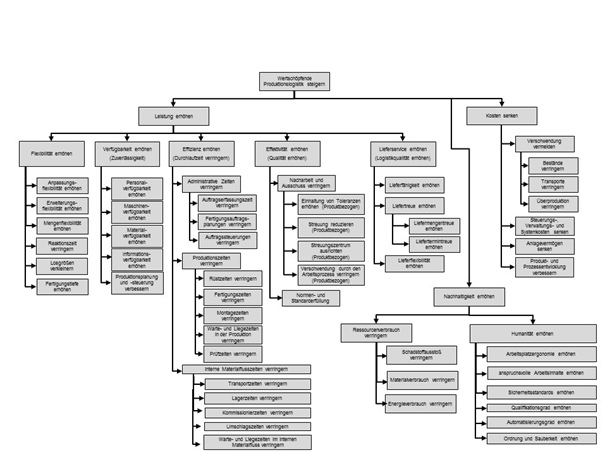
    The “empower” project aims to develop an interdisciplinary concept for methodical decision support when selecting alternative measures to increase the efficiency of production logistics processes in Upper Franconian SMEs. The concept is the basis for developing a software application that holistically supports the decision-making process. (© and further information: https://empower.fh-rosenheim.de/). An overview of relevant goals in production logistics can be found below.