Category: Media

  • “KLUGentscheiden!” research project: empowering high school students’ study and career choices

    Making the right decisions in your own life is something that can be learned. The project “KLUGentscheiden!” at the University of Bayreuth shows: Young people who receive systematic training in decision-making skills shortly before leaving school consider their abilities and long-term interests far more thoroughly when choosing a course of study or vocational training than if they spontaneously follow their own wishes or simply trust the recommendations of others. In the coming weeks, the regional cooperation with selected schools that has been successfully established in the project will be further intensified and expanded.

    The coordinator of “KLUG entscheiden!” is Prof. Dr. Johannes Siebert, who set up the project at the University of Bayreuth and now teaches and researches at the MCI Management Center Innsbruck. Dr. Manuel Friedrich, head of the didactics of economics at the University of Bayreuth, is responsible for the didactics. The project is financially supported by the Adalbert Raps Foundation, the Rainer Markgraf Foundation, and the Upper Franconia Foundation and will be continued until the end of 2024 in cooperation with the University of Bayreuth.

    Decision-making training for students

    Many years of research on the theory and practice of decision-making form the basis for sound advice to teachers as well as for the design and implementation of workshops with students. A study coordinated by Siebert and published in “Decision Sciences – Journal of Innovative Education” proves the effectiveness of two-day workshops in which students from upper secondary level vocational schools in the region participated.

    The complete press release of the University of Bayreuth, written by Christian Wissler, can be found here.

    https://www.uni-bayreuth.de/press-releases/KLUG-entscheiden

  • About a literally life-changing decision: children, yes or no?

    About a literally life-changing decision: children, yes or no?

    The decision to what extent one wants to have children has significant consequences for the individual, the couple, and the family. That’s why it’s a decision that needs to be thought about carefully. In the Sunday edition of Die Presse, I give some advice for this particular decision. You can find Ms. Gabriel’s article, which is well worth reading, here: https://www.diepresse.com/6238448/kinderfrei-leben-ohne-reue

    I recommend making decisions proactively and taking your own destiny into your own hands as your decision architect. I explain this background in this #TEDxTalk: https://www.ted.com/talks/johannes_siebert_nudge_yourself_to_make_better_decisions, which has been well received and already has over 150,000 views and 5,000 likes; I am happy about every additional view and like😊.

    For even more interested on the topic, check out this free MOOC Smart Decisions (https://imoox.at/course/smartentscheiden). Those even more interested in deciding to what extent to have children will find further input in an interview in the Standard from August 2022. You can find the article here: https://www.derstandard.at/story/2000137561015/wie-werde-ich-mir-klar-ob-ich-kinder-will

  • How to finish a bachelor or master thesis successfully

    How to finish a bachelor or master thesis successfully

    Many students struggle to finish their thesis. In this weekend’s edition of the Standard, I share some tips on how you can outsmart yourself to finally finish your thesis or dissertation. However, the tips are applicable to almost any task you might be putting off. You can find Ms. Ostermann’s article, which is well worth reading, here.

    The basic idea of the extension of classical nudging is to be your own decision architect. I explain the background in this #TEDxTalk: https://www.ted.com/talks/johannes_siebert_nudge_yourself_to_make_better_decisions

    If you’re even more interested in the topic, you’ll find enough exciting material for the football-less, rainy pre-Christmas season in this free MOOC Smart Decisions (https://imoox.at/course/smartentscheiden) In the weekend edition of the Standard, I give decision-theoretically sound tips on how to finally finish your final paper

  • “Smart decisions make you really happy”: MCI MOOC top-rated course on iMooX

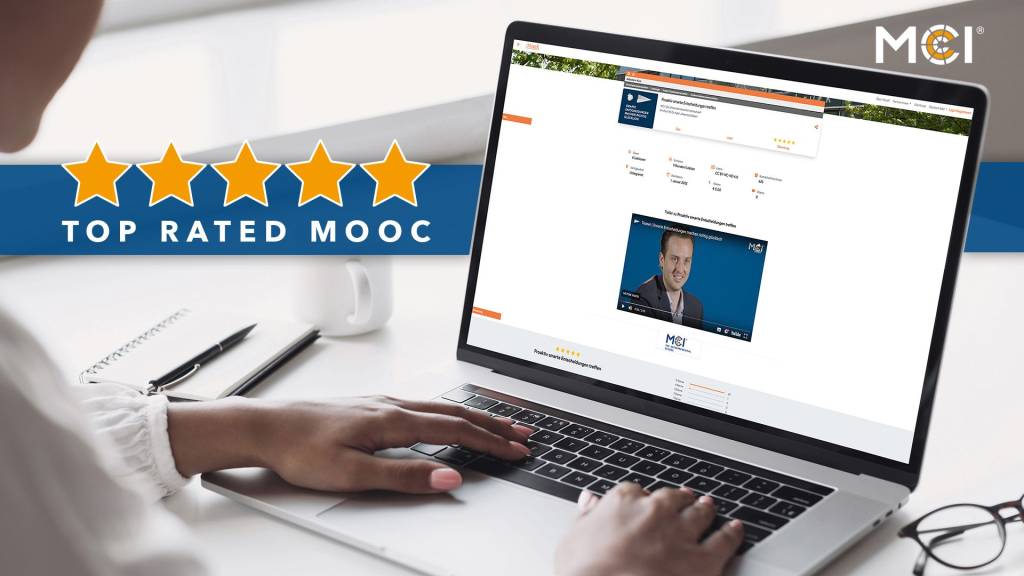
    “Smart decisions make you really happy”: MCI MOOC top-rated course on iMooX

    Smart decisions make people really happy! Within the first nine months, 650 satisfied participants have already learned how to actively make them in our MCI MOOC “Smart Decisions” by Prof. Johannes Siebert. The MOOC is the best-rated course among over 100 courses on the iMooX platform and has a rating of 4.98 out of 5.00 stars.

    The core of the free MOOC consists of 8 interactive videos with a total length of just over 2.5 hours. In addition, more in-depth teaching materials, reflection exercises and quizzes are provided. Participants are also encouraged to work on their own running example(s).

    Prof. Siebert explains why many people make bad decisions and how they can avoid that. He presents some simple but effective methods based on recent developments in behavioral economics and decision sciences. The participants learn to make reflective and conscious decisions. Therefore, Prof. Siebert enables the participants to become their own so-called decision architects. A short summary of this concept can be found in the TEDxTalk „Nudge yourself to make better decisions“ by Prof. Siebert.

    The methods presented are basically suitable for almost all decisions. Since career decisions are highly relevant not only for students, Prof. Siebert explains the methods consistently on career decisions. In particular, he focuses on the choice of jobs after graduation.

    The advantages of a MOOC are particularly evident in self-directed learning. Learners can plan, design and evaluate their learning process independently. This is a key competence that is indispensable for lifelong, successful learning. Teachers can also actively promote self-directed learning in the classroom by working with authentic and realistic problems or projects, for example. Instead of directly teaching the theoretical and practical principles, they let the students work independently. This also motivates them to take on new and complex challenges.

    So, what do students say about this form of learning? What do they particularly like about it? Here are a few reviews from our MCI MOOC.

    “The explanations in the videos were easy to understand and could immediately be applied. The flexibility of location and time of online courses is the biggest advantage of a course like that.”

    “Content well structured, good mix of learning and applying, understandably formulated and comprehensible.”

    “The clear, entertaining food for thought and the tasks for reflection on this, based on own objectives.”

    “The great revision through the breaks/interruptions in the videos as well as the incorporated questions – pretty cool!”

    If you are interested, you can sign up for the free MOOC here.

    Why should you address your ability to make good decisions? Those who make good decisions are subsequently more satisfied with their lives. In addition, a research team led by Prof. Siebert was able to empirically prove that good, proactive decision-making can be increased through decision-making training such as lectures or a MOOC. More information on this can be found here. Taken together, research indicates that students in courses taught by Prof. Siebert at the Entrepreneurial School® not only learn to make more proactive decisions, but as a result, are more satisfied with their lives.

    We invite you to make use of the fascinating proactive decision-making in our attractive study programs (BA Wirtschaft & Management for Professionals, BA Business & Management, and MA International Business & Management) to accelerate your personal and academic development as well as your professional career.

    „MCI MOOC “Smart Decisions” top-rated MOOC“, News of the Research Area Innovation, Entrepreneurship & Marketing at MCI | THE ENTREPRENEURIAL SCHOOL®, 3rd of October 2022 (link)
  • How do I get clear about whether I want kids?

    How do I get clear about whether I want kids?

    The ideal of a large family with children still exists. But many people today are unsure whether they really want that. They may be in their 20s or 30s, their friends are having babies, and they imagine what it will be like. They observe beaming but stressed parents. And they themselves haven’t made up their minds yet – because they’re actually quite happy with the way their lives are right now. At the same time, there’s the fear of missing out. How do you find out what’s right?

    Lisa Breit spoke with experts from various disciplines about this question: Johannes Siebert is a decision researcher, Melanie Hausler is a psychologist and happiness researcher, and Johannes Frass is a life coach and budding psychotherapist in Vienna. They explain how to make the decision and whether children really do make you happier.

    You can find the article in the Standard here: https://www.derstandard.at/story/2000137561015/wie-werde-ich-mir-klar-ob-ich-kinder-will

  • The research project PerFake explores methods to reduce the influence of fake news on individuals

    The research project PerFake explores methods to reduce the influence of fake news on individuals

    Fake news became a global phenomenon with the 2016 U.S. presidential election and the Brexit referendum, particularly because more and more people are using social media as a source of news without reflection. The spread of fake news on the Internet and its consequences are being intensively discussed in the European Parliament. Nevertheless, so far, there is no clear agreement on how to reduce the influence of fake news.

    „The problem with fake news is that even if it is flawlessly identified as such, something still „sticks“ – the fake news continues to influence our opinion”, explains Prof. Johannes Siebert, who researches and teaches at MCI | The Entrepreneurial School®. This phenomenon is called „belief perseverance bias“ and explains the great influence of fake news on the formation of opinion and the decision-making behavior of many people. „There are numerous newsrooms and nonprofit organizations that identify fake news. This very elaborate work helps reduce the influence of fake news. However, these fact checks can only be a first step,“ adds Dr. Jana Siebert from the Palacky University Olomouc in the Czech Republic.

    The two researchers have been working on the methodological reduction of the belief perseverance bias in the context of fake news in the project „PerFake“ funded by the European Union and the Czech Ministry of Education, Youth and Sports. The aim of the PerFake project was to contribute to reducing the negative influence of fake news. Prof. Johannes Siebert and Dr. Jana Siebert developed two methods to reduce the belief perseverance bias and tested and optimized them in two experiments with numerous participants. The experiments consisted of three main steps. Participants were (1) confronted with fake news, (2) informed that it was fake news, and (3) confronted with methods to reduce the bias. At each step, participants’ opinion was measured to determine the bias and analyze the effectiveness of the methods to reduce that bias.

    Both tested debiasing methods showed promising results in reducing the belief perseverance bias. The debiasing method „counter-speech“ focuses on refuting the fake news by clear counter-arguments. The debiasing method „awareness training“ generally informs the participants about the existence of the belief perseverance bias and how the bias works. Such awareness training could help increase society’s resilience to fake news. Prof. Johannes Siebert explains how this can work in practice: „Let us assume you have received a piece of information, for example, you have heard a speech by a politician or read a post on social media. A fact check shows that it is fake news. Being aware of the belief perseverance bias should then help you realize that your original opinion may still be negatively influenced by the fake news and subsequently correct this bias.“ Dr. Jana Siebert adds: „It would, therefore, be desirable to educate the public about the belief perseverance bias and the way it works. For example, fact-checking organizations could complement their fact checks with a note informing about the belief perseverance bias. Such a note could significantly increase the effectiveness of fact-checking and society’s resilience to fake news.“

    Source: „Reduktion des Einflusses von Fake News“, News des Forschungsschwerpunks Innovation, Entrepreneurship & Marketing at MCI | THE ENTREPRENEURIAL SCHOOL®, 24th of February 2022 (link)

  • Fact checks can only be a first step

    Fact checks can only be a first step

    Fake news: a globalphenomenon with a negative impact on opinions. Professor Johannes Siebert from MCI and Dr. Jana Siebert from Palacky University Olomouc are fighting against this with their project “PerFake”.

    “Misinformation has always been a part of our society,” says Johannes Siebert. With the Brexit referendum and the 2016 U.S. presidential election, fake news – “misinformation deliberately spread to manipulate opinions,” the professor says – has become a global phenomenon. Ubiquitous. The spread of false facts has been aided in recent years by digital social networks, he said. In particular, by the fact that more and more people living in their Facebook bubble unthinkingly refer to it as a source for news.

    You can find the full interview here: https://www.unipress.at/wissenschaft/faktenchecks-koennen-nur-ein-erster-schritt-sein/

  • The luck of the wise decision

    The luck of the wise decision

    Very few people have learned how to make good decisions. Yet the ability to consciously find optimal decisions makes people happier in life. In the Standard, I explain how people can train themselves to make better decisions and, as a result, be more satisfied with their lives.

    Being self-determined means constantly making your own decisions. As we all know, these are not always the right ones. Afterwards, one is usually smarter, but then also often more frustrated, because what was actually planned did not occur. Johannes Siebert from the Management Center Innsbruck (MCI) and his team have proven this connection in several empirical studies: “We have shown in a structural equation model that those who have higher proactive cognitive abilities for decision-making are subsequently more satisfied with their lives,” Siebert reports. Such skills, which are necessary for making wise decisions in private life or at work, can be improved through appropriate training….

    The full article by Johannes Lau can be found here.

    References

    Siebert, Johannes U., Becker, Maxi; Oeser, Nadine. “Making the right career choice: A new educational tool to train decision-making proactivity in high school students” (Decision Sciences Journal for Innovative Education), https://onlinelibrary.wiley.com/doi/10.1111/dsji.12280

    Siebert, Johannes U.; Kunz, Reinhard, Rolf, Philipp. “Effects of decision training on individuals’ decision-making proactivity”, European Journal of Operational Research, 294 (1) 2021, 264-282 https://doi.org/10.1016/j.ejor.2021.01.010

    Siebert, Johannes U.; Kunz, Reinhard, Rolf, Philipp. “Effects of Proactive Decision Making on Life Satisfaction”, European Journal of Operational Research, 280(1) 2020, 1171-1187,  doi.org/10.1016/j.ejor.2019.08.0111

    Siebert, Johannes U.; Kunz, Reinhard. “Developing and Validating the Multidimensional Proactive Decision-Making Scale”. Special Issue „Behavioral Operations Research“ in European Journal of Operational Research, 249(3) 2016, 864-877.dx.doi.org/10.1016/j.ejor.2015.06.066

  • How to make the better life decisions

    How to make the better life decisions

    Can we learn to make decisions in such a way that they positively influence developments in our private lives or in companies in the long term? Only if the character traits are right, says research.

    “A large proportion of companies make extremely poor decisions because they are unable to identify their objectives,” explains Johannes Siebert of Management Center Innsbruck (MCI). Only if the company’s objectives and values were defined could they be systematically pursued. If this does not happen, clinging to the status quo reigns instead of proactively initiating change. According to Siebert, making the right decisions is also the basis for entrepreneurial success.

    In Die Presse, I explain how people can make decisions and subsequently be more satisfied with their lives. Just follow this link.

    Sources

    Siebert, Johannes U.; Kunz, Reinhard, Rolf, Philipp. “Effects of decision training on individuals’ decision-making proactivity”, European Journal of Operational Research, 294 (1) 2021, 264-282 https://doi.org/10.1016/j.ejor.2021.01.010

    Siebert, Johannes U.; Kunz, Reinhard, Rolf, Philipp. “Effects of Proactive Decision Making on Life Satisfaction”, European Journal of Operational Research, 280(1) 2020, 1171-1187,  doi.org/10.1016/j.ejor.2019.08.0111

    Siebert, Johannes U.; Kunz, Reinhard. “Developing and Validating the Multidimensional Proactive Decision-Making Scale”. Special Issue „Behavioral Operations Research“ in European Journal of Operational Research, 249(3) 2016, 864-877.dx.doi.org/10.1016/j.ejor.2015.06.066

  • Learning to decide wisely and becoming happy: Studies show the effect of training on decision-making behaviour

    Learning to decide wisely and becoming happy: Studies show the effect of training on decision-making behaviour

    Veröffentlichungen

    Johannes Ulrich Siebert, Reinhard E. Kunz, Philipp Rolf. Effects of decision training on individuals’ decision-making proactivity. European Journal of Operational Research (2021), DOI: https://doi.org/10.1016/j.ejor.2021.01.010

    Johannes Ulrich Siebert, Reinhard E. Kunz, Philipp Rolf: Effects of proactive decision making on life satisfaction. European Journal of Operational Research (2020), 280, 1171-1187. DOI: https://doi.org/10.1016/j.ejor.2019.08.011[JS1] 

    Universität Bayreuth, Pressemitteilung Nr. 020/2021 vom 15.02.2021

    People who make smart decisions in important private and professional matters increase their chances of greater life satisfaction. The cognitive skills required for this can be significantly honed through training. This is the conclusion reached by researchers at the University of Bayreuth in recent empirical studies published in the European Journal of Operational Research. Courses lasting several weeks with participants of different age and occupational groups demonstrably strengthened their ability to make well-considered choices in difficult decision-making situations.

    When cognitive skills that produce proactive, wise decision-making behaviour are too weak, wrong decisions are made, or more precisely, suboptimal courses of action are chosen. Not infrequently, this permanently impairs quality of life and life satisfaction. However, training courses that include both basic knowledge and practical exercises can significantly improve decision-making behaviour – precisely by strengthening cognitive skills. These include, above all, the cognitive skills to approach decision-making situations proactively and with foresight, to gain clarity about one’s own goals, to identify promising options, and to make the best possible choice by weighing them carefully. This is what a research team at the University of Bayreuth has discovered over several years of work. PD Dr. Johannes Siebert, Philipp Rolf, and former Junior Professor Dr. Reinhard Kunz, who now holds a professorship at the University of Cologne, were involved.

    Training, however, cannot change personality traits, which – in addition to cognitive skills – also have a significant influence on decision-making behaviour. “Dispositions that are effective in the long term, such as striving for self-optimization or an attitude toward life that takes initiative, obviously cannot be formed within a few weeks or months as a result of training courses,” explains Siebert, who completed his habilitation in Bayreuth and is currently researching and teaching at the Management Center Innsbruck.

    In a previous study, the Bayreuth researchers were able to demonstrate that smart, proactive decision-making behaviour can significantly promote life satisfaction. The decisive factor here is not only the skill to prudently evaluate and weigh up given options for action, but also the skill to independently discover further options or even create new ones. “Our studies clearly show that the extent to which we are satisfied with our lives by no means depends solely on circumstances outside our control. Proactive decision-making behaviour helps us to open up new and better options for action and thereby strengthens our own quality of life. Because we can specifically train the skills required for this, it is in our own hands whether we develop into satisfied people or not,” says Philipp Rolf, Research Associate at the Production Management & Industrial Management research group at the University of Bayreuth.

    The new findings on strengthening the cognitive characteristics that are important for good decision-making emerged from the scientific monitoring and evaluation of three courses that lasted several weeks. An online course on the quality of decisions was conducted in cooperation with a renowned U.S. university, a lecture on decision theory was held at a technical university in Germany, and courses at the Management Center Innsbruck in Austria focused on the systematic structuring and solving of decision-making situations. The more than 1,000 participants in total belonged to different age and professional groups, and thus represented a broad social spectrum. “All three courses demonstrably strengthened participants’ ability to reach the right decisions through proactive and smart thinking – regardless of their age, gender, or occupation,” says Siebert.

    “KLUG entscheiden!” (deciding smart): A school project in Upper Franconia

    The results of the two studies will also be incorporated into the “KLUG entscheiden!” school project, which was launched three years ago in Upper Franconia and the Upper Palatinate. In workshops, numerous students have already been guided to making well-founded and far-sighted decisions in selecting an apprenticeship or a course of study after leaving school. In addition, teachers have been familiarized with the basics of decision theory and instructed in how to integrate the content developed in the project into their teaching. At the same time, the project addresses the question of how schools can promote such decision-making behaviour. “Initial results show that students can train their decision-making skills and subsequently approach their career choice decisions more confidently. This results in very interesting new starting points for supporting young people,” Siebert sums up. The project is financially supported by the Rainer Markgraf Foundation, the Adalbert-Raps-Foundation, and the Upper Franconia Foundation, and will be continued until the end of 2021 in collaboration with the University of Bayreuth.

    Source: „Learning to decide wisely and becoming happy: Studies show the effect of training on decision-making behaviour“, Media release of the University of Bayreuth 020/2021 (link, link) 15th of February