Schlagwort: Value-focused Thinking

  • ChatGPT vs. Expert:innen: Kann generative KI hochwertige Zielsysteme für organisationale und politische Entscheidungen entwickeln?

    ChatGPT vs. Expert:innen: Kann generative KI hochwertige Zielsysteme für organisationale und politische Entscheidungen entwickeln?

    Diese Studie untersucht die Leistungsfähigkeit generativer künstlicher Intelligenz (GenAI) im Kontext des Value-Focused Thinking, insbesondere ihre Fähigkeit, hochwertige Zielsysteme für organisationale oder politische Entscheidungen zu entwickeln. Insgesamt zeigen unsere Ergebnisse, dass die von GenAI generierten Ziele einzeln betrachtet meist sinnvoll sind, die resultierenden Zielsysteme als Ganzes jedoch deutliche Schwächen aufweisen. Häufig enthalten sie irrelevante Aspekte, lassen wichtige Ziele aus und sind zudem redundant sowie nicht klar strukturierbar. Dies ist unter anderem darauf zurückzuführen, dass GenAI dazu neigt, Mittelziele einzubeziehen – selbst dann, wenn dies explizit vermieden werden soll.

    Gleichzeitig zeigen wir, dass sich die Qualität der Zielsysteme durch den Einsatz von Best Practices im Prompting sowie durch Expertise in der Entscheidungsanalyse deutlich verbessern lässt. Die Ergebnisse unterstreichen die Bedeutung eines „Human-in-the-Loop“-Ansatzes: GenAI eignet sich gut zur Generierung erster Zielideen, jedoch ist die Einbindung von Expert:innen mit fundiertem Hintergrund in der Entscheidungsanalyse entscheidend, bevor die Ergebnisse zur Unterstützung realer Entscheidungen verwendet werden.

    Zur praktischen Umsetzung präsentieren und demonstrieren wir einen vierstufigen Ansatz, der die jeweiligen Stärken von GenAI und Entscheidungsanalyst:innen kombiniert.

    Simon, Jay; Siebert, Johannes U. ChatGPT vs. Experts: Can GenAI Develop High Quality Organizational and Policy Objectives? Decision Analysis (in press). https://doi.org/10.1287/deca.2025.0387
  • Value focused decision making – How to be successful by thoughtful decision making?

    Value focused decision making – How to be successful by thoughtful decision making?

    Selecting a university, choosing a dissertation topic, pursuing friendships, arranging an internship, finding a place to study abroad, getting a well-paid summer job, and accepting an employment offer. There are numerous decision tasks in a student´s life to be made, which have a significant impact on their personal future. But how to do it properly? Is there a proper way of decision making (with the effect of enhancing the quality of life), or is there a power of thinking without thinking and no need to put much effort into it?

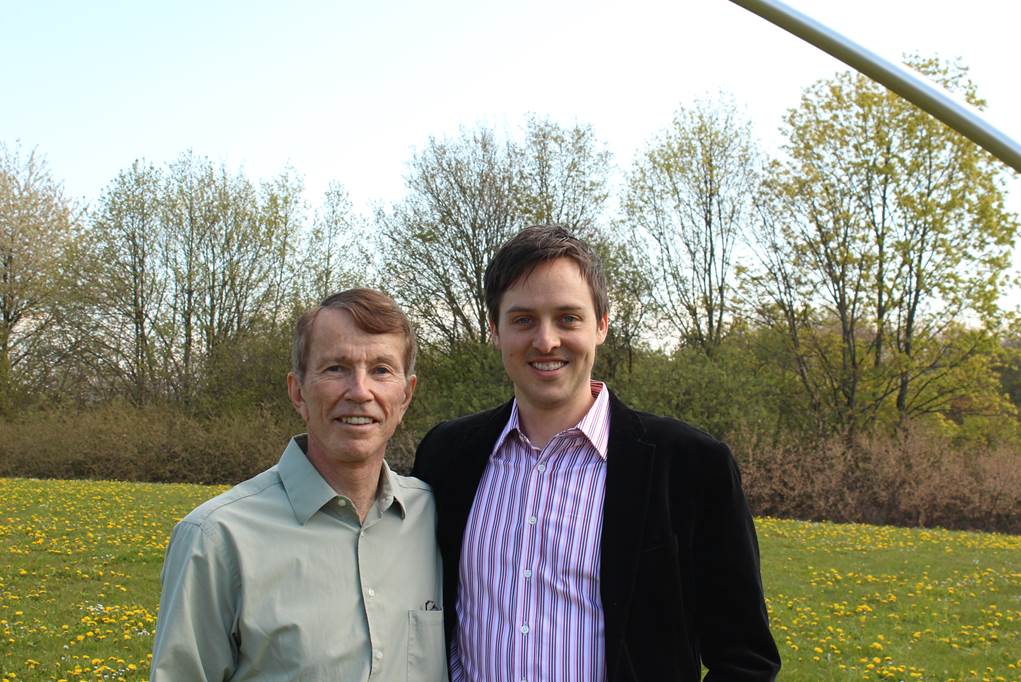
    This marks the beginning of a scientific workshop on decision-making, led by PD Dr. Johannes Siebert (University of Bayreuth) in collaboration with Professor Dr. Ralph L. Keeney (Duke University, USA).

    PD Dr. Johannes Siebert ist „Akademischer Oberrat“ at the Chair of BWL 5, Produktionswirtschaft & Industriebetriebslehre. After graduating with a thesis on multiattribute utility theory, he applied a more qualitative technique. He got in contact with the ideas of Value Focused Thinking and learned from its founder, Prof. Dr. Ralph Keeney. The theory is based on the assumption that actively using a system of values is the key to more and better alternatives for acting, which have the power to lead to more satisfaction than the reactive way of choosing only when forced and only between the obvious choices A or B.

    In cooperation with Prof. Dr. Ralph Keeney, Dr. Siebert successfully verified this hypothesis empirically through a series of experiments, some of which were conducted at the University of Bayreuth. This work led to a publication in a world-class journal. Dr. Siebert did his doctoral dissertation on “Behavioural Operations Research and Decision Analysis” and is now applying for a full professorship.

    Prof. Keeney is an engineer but famous as a research Professor Emeritus of Decision Sciences at the Fuqua School of Business at Duke University. He received his PhD in Operations Research at the world-famous MIT in 1969. His research interests lie in the fields of decision-making and risk analysis, with a particular emphasis on problems that involve multiple objectives. Professor Keeney is the author of several books and highly ranked articles. A current interest concerns distilling the body of knowledge in the decision sciences to provide practical and usable advice that helps people make better decisions.

    You can find the full blog here: https://doi.org/10.58079/v23b